Freetown Village

Helping young Black Americans find cultural grounding through interactive storytelling

Role: UX Researcher & Product Strategist
Team: 4-person team of Product Designers
Timeline: 2 months

OVERVIEW

Freetown Village, a 40-year-old living history museum (live events performances), reached audiences 40 - 50+ age, invisible to Gen Z. I led research and strategy to design a platform helping young Black Americans find cultural grounding through interactive storytelling.


RESEARCH & PROBLEM REFRAMING
Led stakeholder interviews and synthesis that uncovered the real problem: young users weren't seeking more content, they needed cultural belonging in a landscape of misinformation and negative representation.
STRATEGIC PRODUCT DESIGN
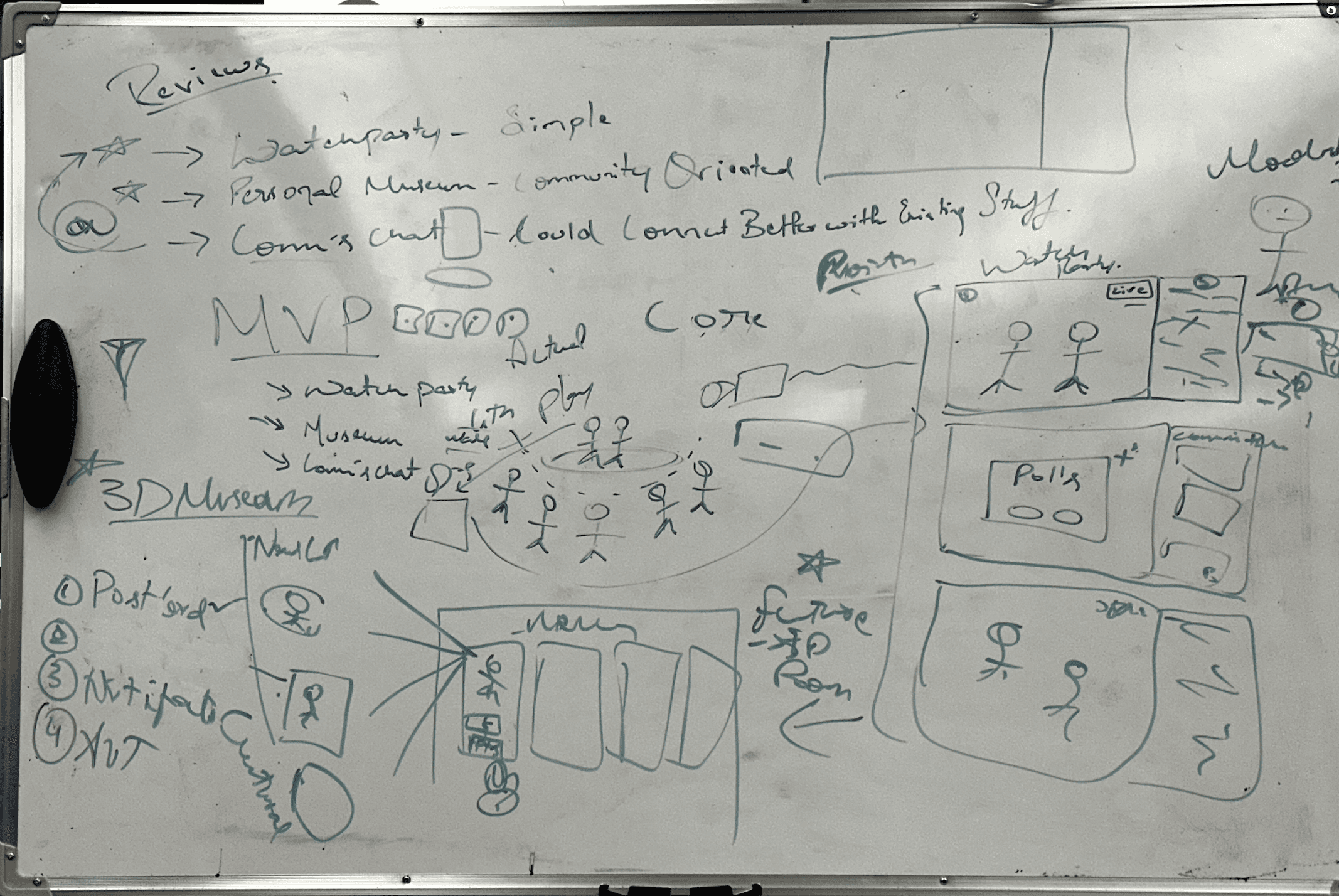
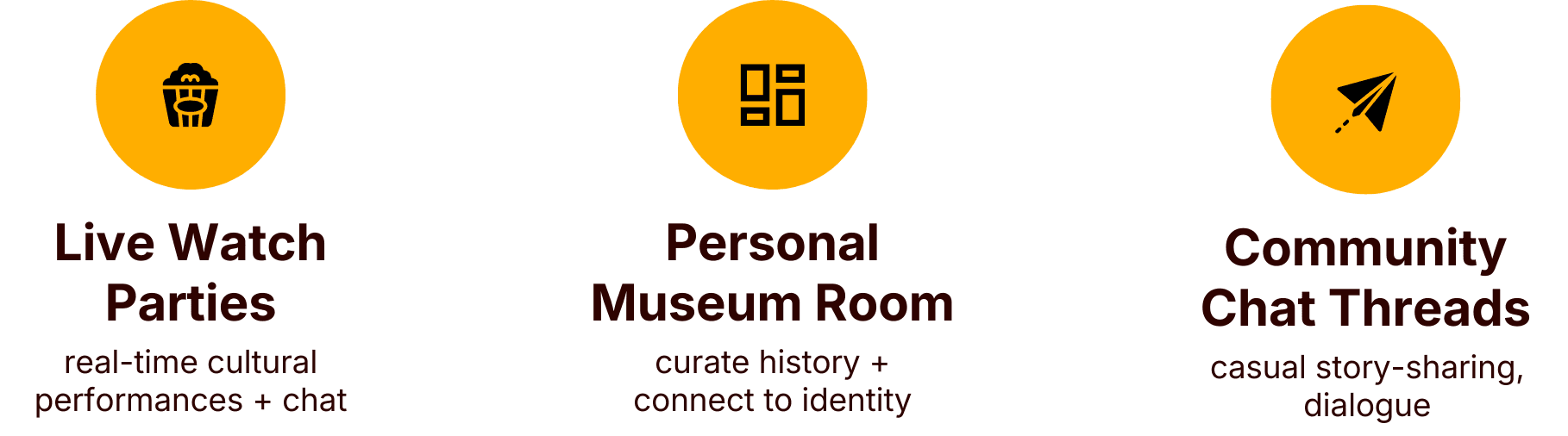
Designed a three-feature platform (Live Watch Parties, Virtual Museum, Community Spaces) balancing user desirability with technical feasibility and business viability, a core emphasis of the course.
BUSINESS MODEL DEVELOPMENT
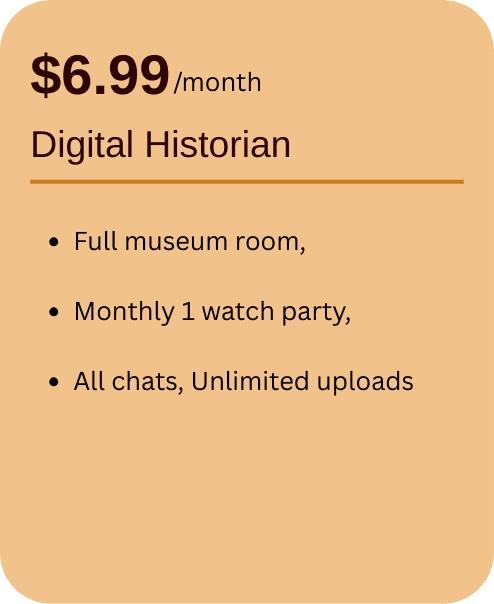
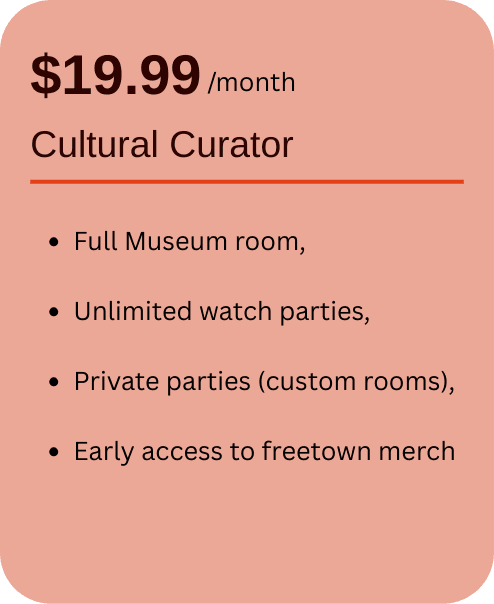
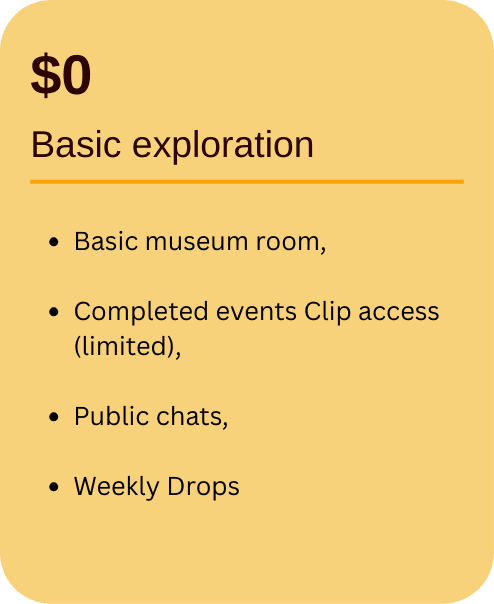
Created a youth-accessible revenue model ($0-$19.99/mo tiers) projecting break-even at 18 months, offering the nonprofit a path away from 80% grant dependency.
VALIDATION & ITERATION
Conducted usability testing with target users, identifying critical UX gaps (confusing point system, intrusive quiz pop-ups) and iterating toward a validated MVP.
RESEARCH & PROBLEM REFRAMING
Led stakeholder interviews and synthesis that uncovered the real problem: young users weren't seeking more content, they needed cultural belonging in a landscape of misinformation and negative representation.
STRATEGIC PRODUCT DESIGN
Designed a three-feature platform (Live Watch Parties, Virtual Museum, Community Spaces) balancing user desirability with technical feasibility and business viability, a core emphasis of the course.
BUSINESS MODEL DEVELOPMENT
Created a youth-accessible revenue model ($0-$19.99/mo tiers) projecting break-even at 18 months, offering the nonprofit a path away from 80% grant dependency.
VALIDATION & ITERATION
Conducted usability testing with target users, identifying critical UX gaps (confusing point system, intrusive quiz pop-ups) and iterating toward a validated MVP.

THE PROBLEM

They're not looking for content, they're looking for belonging

Through our interviews with 4 community members (ages 23-35) and analyzing secondary research such as demographic data, it was found:

79%

African American teens want to learn how slavery's legacy still affects them today

76%

Have talked with relatives about family ancestry

18%

Only trust social media for accurate historical information

This insight drove our problem statement and ideation phase

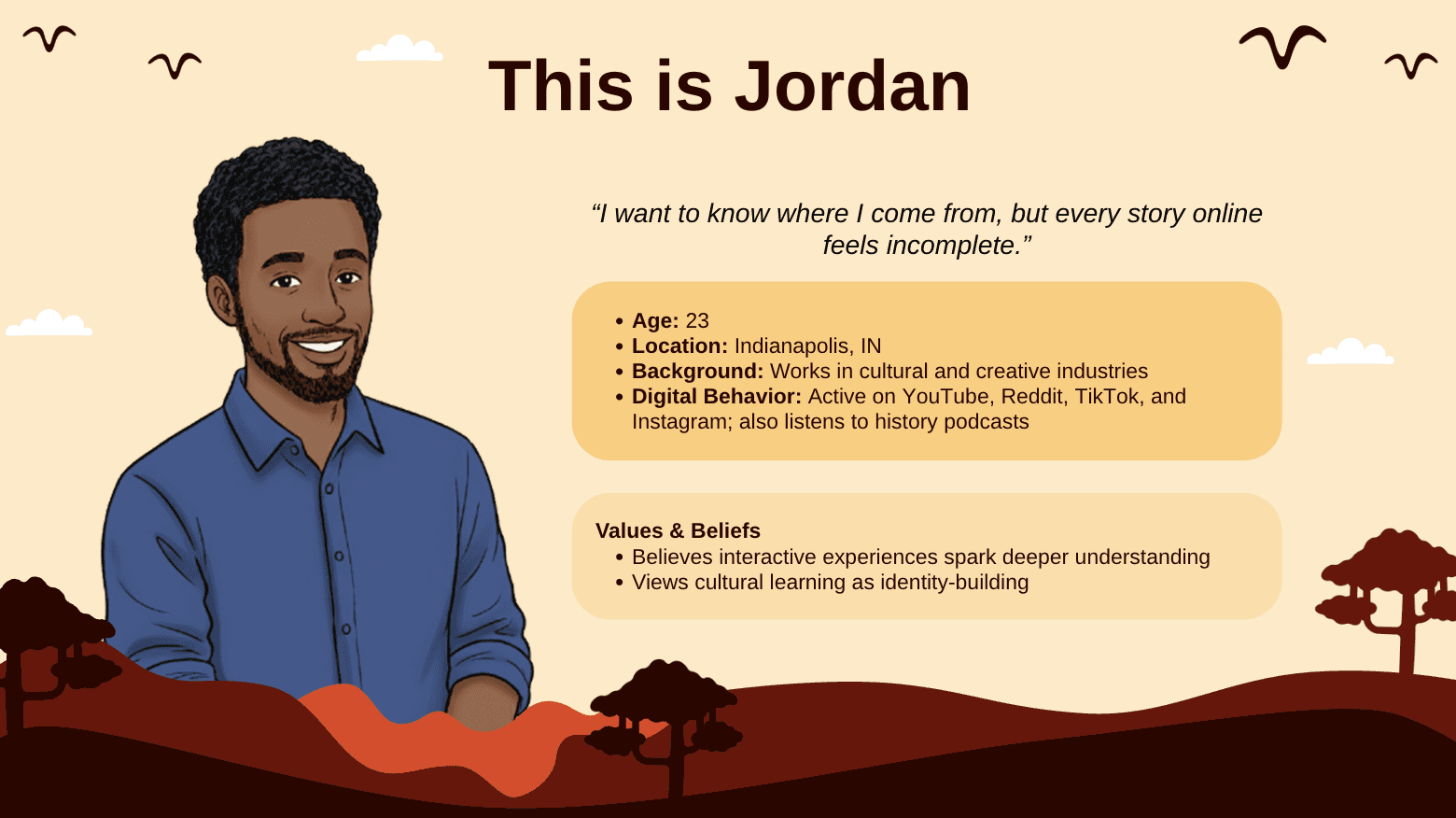
As a young, digitally active learner,
When I explore historical or cultural content online,
I want to feel more connected to my historical roots,
So I can ground myself
but many sources lack credibility, consistent engagement and value

As a young, digitally active learner,
When I explore historical or cultural content online,
I want to feel more connected to my historical roots,
So I can ground myself
but many sources lack credibility, consistent engagement and value

Problem Statement

THE RESEARCH ARTIFACTS
Through 4 stakeholder interviews, 3 core needs were identified.

TRUST
Credible sources in a landscape of misinformation
INTERACTIVITY
Active participation, not passive consumption
COMMUNITY
Connection with others on the same journey
TRUST
Credible sources in a landscape of misinformation
INTERACTIVITY
Active participation, not passive consumption
COMMUNITY
Connection with others on the same journey

Critical User Needs

IDEATION

From Insights to Ideas

With clear user needs identified, our team moved into rapid ideation. We needed to answer: How might we help young digitally active learners connect with trustworthy and interactive experiences, so they feel more grounded in their historical roots?

Key Questions We Explored:

  • How do we replicate the "fourth wall breaking" experience characters do in-person events?

  • What makes history feel personal and tangible in a digital space?

  • How can a nonprofit realistically build and maintain an audience digitally?
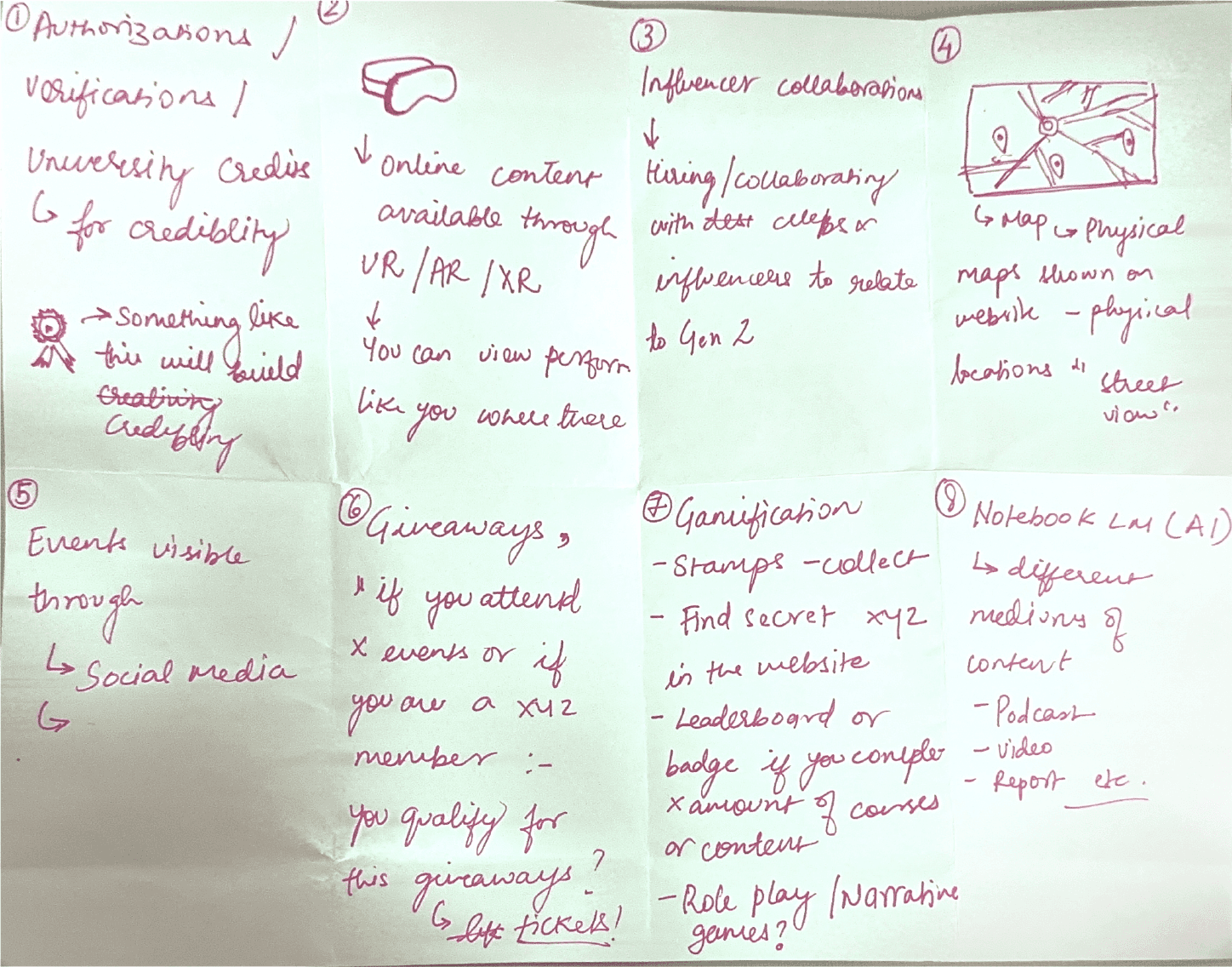
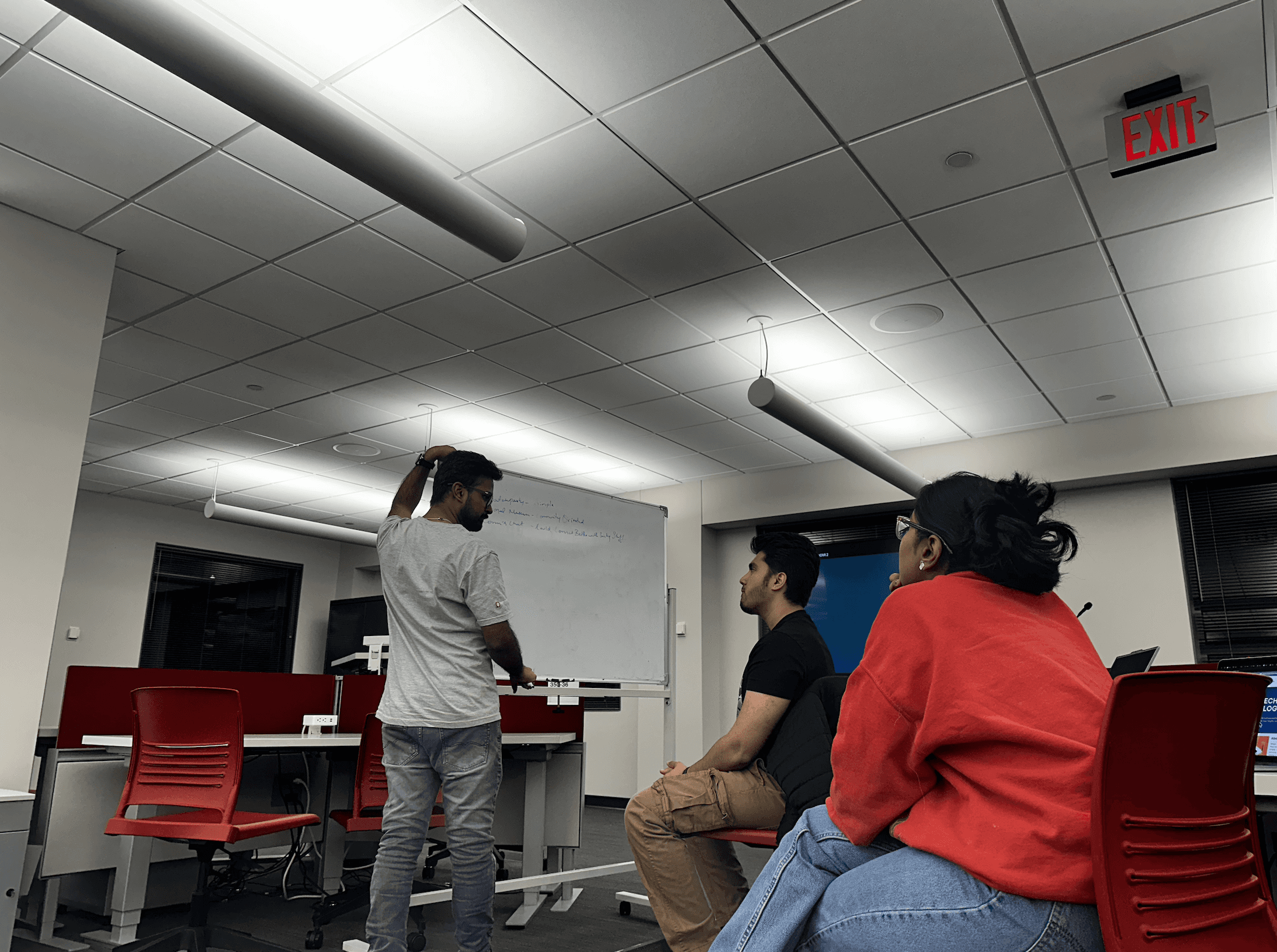
Iteration Methods: Crazy 8's, Brainstorming and Iterating

3 CORE FEATURES EMERGED FROM IDEATION
TESTING AND LEARNING

What Users Loved, and What Needed Fixing

Method: Think-aloud usability testing with low-fidelity Figma prototype

Tasks We Tested:

  1. Join a live watch party and write a comment in chat

  2. Answer an interactive quiz during the performance and earn points

  3. Use points to purchase an artifact and add it to personal museum
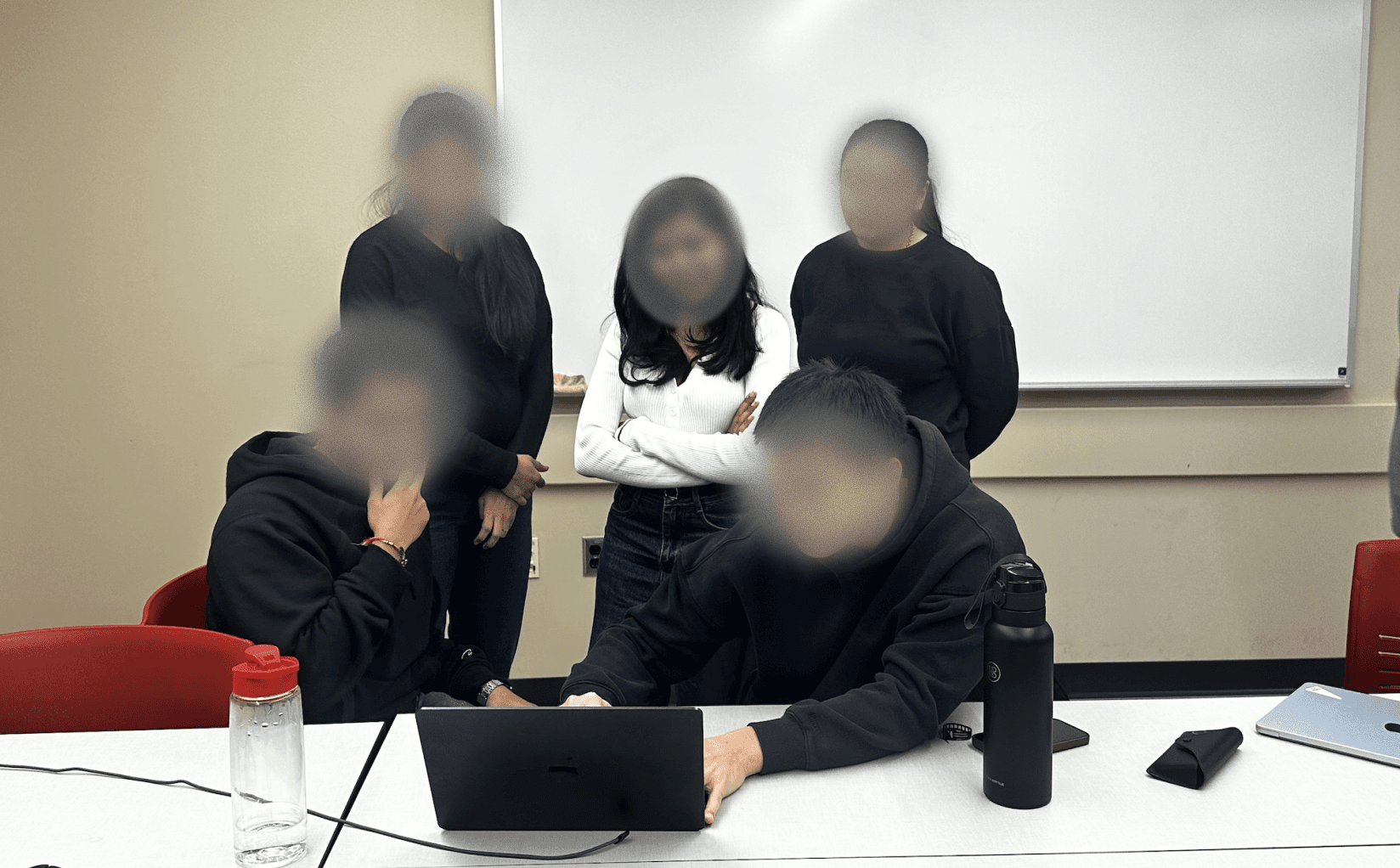
User Testing

Success Metrics

92% would recommend the experience

84.5% agreed "learning African American history is important to me

"I want to show this to my family"

Areas for Improvement: User Feedback

Safety Concerns in Community Spaces

During usability testing, multiple participants expressed discomfort with unmoderated community features. "People say terrible things" one user stated, reflecting concerns that the platform might replicate the exact online toxicity users were trying to escape.

Intrusive Quiz Interruptions

Users became frustrated when interactive quizzes appeared suddenly and blocked the live performance. "Pop-up blocks the live play" one participant said, as the timing broke immersion at critical moments in the cultural storytelling.

Unclear Point System

Participants were confused about where points came from and why they mattered. "I wasn't sure where they came from" one user explained, missing the connection between engagement and their personal cultural archive.

Unclear Point System

Participants were confused about where points came from and why they mattered. "I wasn't sure where they came from" one user explained, missing the connection between engagement and their personal cultural archive.

THE SOLUTION

Three Integrated Features Addressing Trust, Interactivity, and Community

Feature 1: Live Watch Parties

Users tune in to watch Freetown Village's live historical performances together in real-time, with interactive quizzes and community chat creating shared cultural moments.

How it addressed user feedback:

  1. Added 5-second countdown timers,

  2. Repositioned quizzes to side panels with skip buttons (solving intrusive pop-ups), and

  3. Implemented moderated chat with private party options (addressing safety concerns).

How it addressed user feedback:


  1. Added 5-second countdown timers,

  2. Repositioned quizzes to side panels with skip buttons (solving intrusive pop-ups), and

  3. Implemented moderated chat with private party options (addressing safety concerns).

Feature 2: Museum of Memorabilia

Users collect points through participation and unlock historical artifacts to display in their personal 3D museum space, making cultural exploration tangible and permanent.

How it addressed user feedback:

  1. Added explicit upfront onboarding explaining the point system,

  2. Visible point balance tracking, and

  3. Cultural framing ("Your Cultural Journey") to reduce confusion about how gamification works.

How it addressed user feedback:

  1. Added explicit upfront onboarding explaining the point system,

  2. Visible point balance tracking, and

  3. Cultural framing ("Your Cultural Journey") to reduce confusion about how gamification works.

Feature 3: Community Chat Threads

Safe, moderated spaces where users discuss performances, share family stories, and ask questions of historians, recreating the trusted learning environment 64% of Black Americans prefer.

User reception:

Users loved the community concept and expressed strong interest in connecting with other, emphasizing that visible safety features and moderation were essential for participation.


"I want to show this to my family"

BUSINESS STRATEGY

Youth Accessibility Meets Sustainability
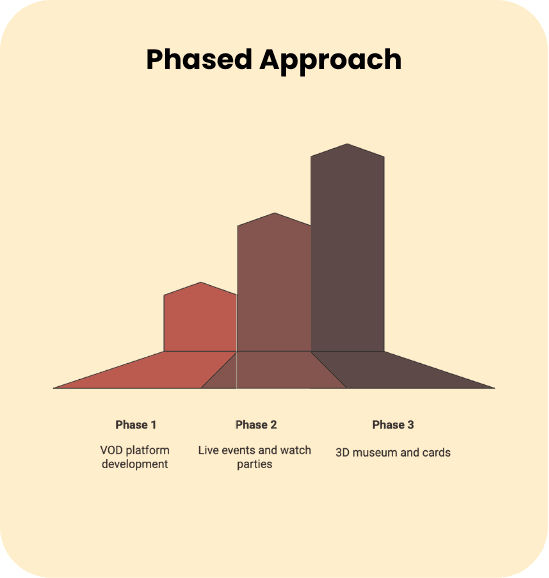
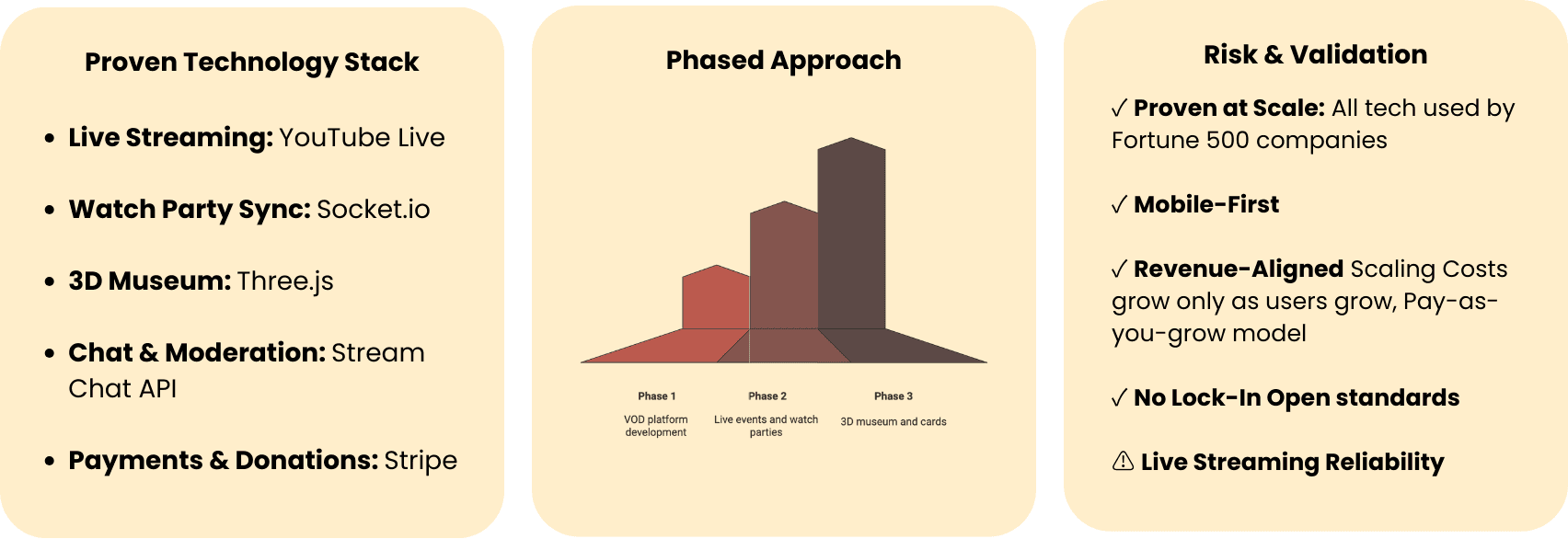
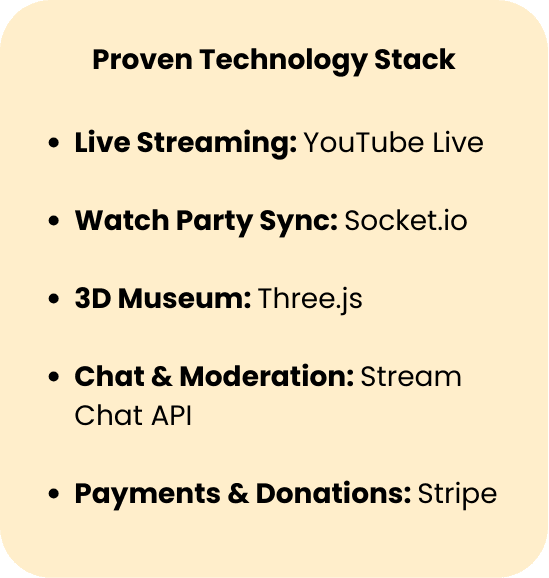
TECHNICAL FEASIBILITY

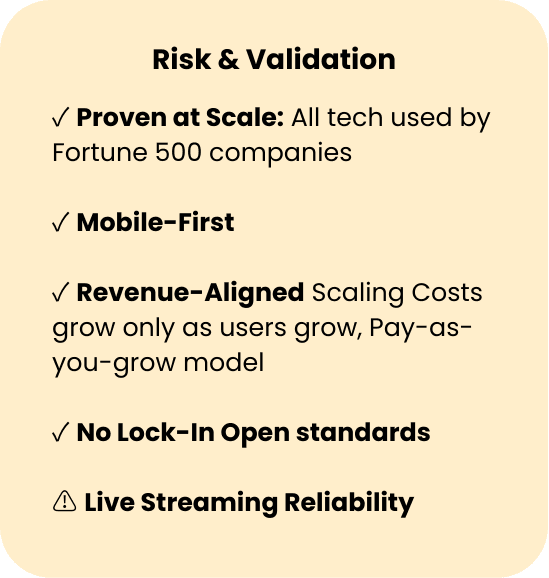
Proven Technology, Phased Approach
IMPACT

Feature image

JORDAN

  • Cultural grounding
  • 25+ artifacts
  • Personal museum
Feature image

FREETOWN VILLAGE

  • Sustainable revenue
  • National reach
  • Digital permanence
Feature image

THE CULTURE

  • Preserved stories
  • 1,000+ users
  • Growing archive
Feature image

JORDAN

  • Cultural grounding
  • 25+ artifacts
  • Personal museum
Feature image

FREETOWN VILLAGE

  • Sustainable revenue
  • National reach
  • Digital permanence
Feature image

THE CULTURE

  • Preserved stories
  • 1,000+ users
  • Growing archive

National reach

WHAT I LEARNT

This project transformed how I think about design. I learned that constraints aren't enemies, they're clarifying forces that drive creativity.

Success came from balancing user needs with Freetown's operational capacity, technical constraints, and business viability. Great design considers the entire ecosystem.
Empathy goes beyond users, design exists in systems

Create a free website with Framer, the website builder loved by startups, designers and agencies.